WV Lawyer Help

We help WV attorneys grow their caseload through smarter marketing, better tracking, and qualified client referrals.

Tag: law firm intake

  • West Virginia Law Firm SEO Guide (2026)

    Most law firms do not have a traffic problem. They have a visibility problem, a trust problem, or a conversion problem.

    A law firm can spend thousands of dollars on SEO, Google Ads, directory listings, and content marketing — and still struggle to consistently generate consultations or signed clients. In many cases, the issue is not effort. The issue is strategy.

    For small and mid-sized firms in West Virginia, SEO can still be one of the most effective long-term marketing investments available. But the firms that succeed are usually not the firms publishing the most random blog posts. The firms that succeed understand local search intent, build trust, create useful content, and measure the right business outcomes.

    This guide breaks down what law firm SEO actually means in 2026, what matters, what does not, and how West Virginia firms can compete more effectively online.

    What Is Law Firm SEO?

    Law firm SEO (Search Engine Optimization) is the process of improving a law firm’s visibility in search engines like Google.

    The goal is simple:

    • appear when potential clients search for legal help
    • build trust
    • generate consultations
    • convert traffic into signed cases

    Examples of searches include:

    • “personal injury lawyer in Charleston WV”
    • “DUI attorney near me”
    • “West Virginia custody lawyer”
    • “how long does a lawsuit take in WV”
    • “what happens in magistrate court in West Virginia”

    SEO is not just about rankings. It is about matching the right information to the right search intent at the right time.


    Why SEO Still Matters for Law Firms

    Many legal searches are high intent.

    Someone searching for:

    • “best divorce lawyer near me”
    • “car accident lawyer Charleston WV”
    • “West Virginia estate planning attorney”

    is often not casually browsing. They may actively need legal help.

    That is why local legal SEO can still create meaningful business value.

    Unlike paid advertising, SEO can continue generating traffic long after content is published. Strong pages can attract search traffic for months or years.


    Why Most Law Firm SEO Fails

    Many firms pay for SEO but never fully understand what they are buying.

    Common problems include:

    Thin Content

    Some agencies publish dozens of low-quality articles with little substance. Google increasingly rewards depth, usefulness, and expertise.

    Generic AI Content

    AI can help with research and drafting, but mass-produced generic content often lacks originality, clarity, or practical value.

    No Local Focus

    A law firm in West Virginia does not need to compete nationally to succeed. Many firms benefit more from dominating local and regional searches.

    Weak Intake Systems

    Traffic alone does not create clients. If calls are missed or intake follow-up is inconsistent, marketing dollars are wasted.

    No Measurement

    Some firms do not track:

    • consultation rates
    • lead sources
    • signed case conversion
    • cost per lead
    • call quality

    Without measurement, it is difficult to know what is actually working.


    The West Virginia SEO Opportunity

    West Virginia presents a unique opportunity for smaller firms.

    Compared to larger metro markets:

    • competition is often lower
    • local search intent is strong
    • many firms underinvest in digital strategy
    • educational legal content is limited

    That creates openings for firms willing to:

    • publish genuinely useful information
    • improve technical SEO
    • build strong local trust signals
    • consistently update content

    Many smaller firms can compete effectively without needing national-scale marketing budgets.


    Local SEO Matters More Than Most Firms Realize

    For many law firms, local SEO is more important than broad national visibility.

    Key local SEO elements include:

    Google Business Profile

    A fully optimized Google Business Profile can significantly improve local visibility.

    Important elements include:

    • accurate categories
    • office hours
    • reviews
    • updated contact information
    • photos
    • practice area descriptions

    Reviews

    Reviews influence both rankings and trust.

    A law firm with strong reviews and responsive client communication may outperform larger competitors with weaker engagement.

    Location Pages

    Firms serving multiple counties or cities should consider dedicated pages for those regions.

    Examples:

    • Charleston WV personal injury lawyer
    • Morgantown estate planning attorney
    • Huntington criminal defense lawyer

    What Law Firms Should Actually Track

    One of the biggest mistakes firms make is focusing only on traffic.

    Traffic matters. Revenue matters more.

    Important metrics include:

    Leads by Source

    Track whether leads came from:

    • Google organic search
    • Google Ads
    • referrals
    • directories
    • social media
    • direct traffic

    Consultation Rate

    How many leads become consultations?

    Signed Client Rate

    How many consultations become paying clients?

    Cost Per Signed Case

    This is often more important than cost per click.

    Intake Response Time

    Fast follow-up can dramatically improve conversion rates.


    SEO vs Google Ads for Law Firms

    Both can work. They serve different purposes.

    SEO

    Strengths:

    • long-term traffic
    • trust building
    • compounding visibility
    • lower long-term acquisition cost

    Weaknesses:

    • slower results
    • requires consistency
    • competitive in some practice areas

    Google Ads

    Strengths:

    • immediate visibility
    • highly targeted
    • scalable

    Weaknesses:

    • expensive
    • requires ongoing budget
    • poor management can waste money quickly

    Many firms benefit from using both strategically.


    Technical SEO Still Matters

    Content alone is not enough.

    Technical SEO basics include:

    • mobile-friendly design
    • fast load speeds
    • secure HTTPS connection
    • proper page titles
    • internal linking
    • clean site structure
    • crawlable pages
    • schema markup

    A technically weak site can struggle even with strong content.


    Internal Linking Is Underrated

    Many law firm websites publish isolated articles with no structure.

    Strong sites typically organize content into:

    • pillar pages
    • practice area hubs
    • supporting articles
    • FAQ content

    Example:
    A “West Virginia DUI Guide” should link to:

    • license suspension information
    • DUI penalties
    • court process explanations
    • local county procedures

    This helps both users and search engines understand the site.


    AI and Law Firm SEO in 2026

    AI is changing legal marketing.

    Tools can help firms:

    • analyze search data
    • improve workflows
    • organize content ideas
    • summarize transcripts
    • assist with drafting

    But AI alone is not a strategy.

    The firms that benefit most from AI are usually the firms that already understand:

    • client psychology
    • legal operations
    • intake processes
    • local search behavior
    • trust building

    Human judgment still matters.


    What Small Law Firms Should Prioritize First

    Many firms try to do everything at once.

    A more practical approach is:

    1. Improve local SEO foundations
    2. Build strong practice area pages
    3. Create useful educational content
    4. Track intake and lead sources
    5. Improve conversion systems
    6. Strengthen reviews and trust signals
    7. Expand strategically over time

    Consistency usually matters more than volume.


    Final Thoughts

    SEO for law firms is becoming less about gaming algorithms and more about building genuinely useful digital experiences.

    For West Virginia law firms, the opportunity is still very real.

    Firms that:

    • understand local search intent
    • publish valuable content
    • improve intake systems
    • build trust
    • measure outcomes

    can still compete effectively online without massive national marketing budgets.

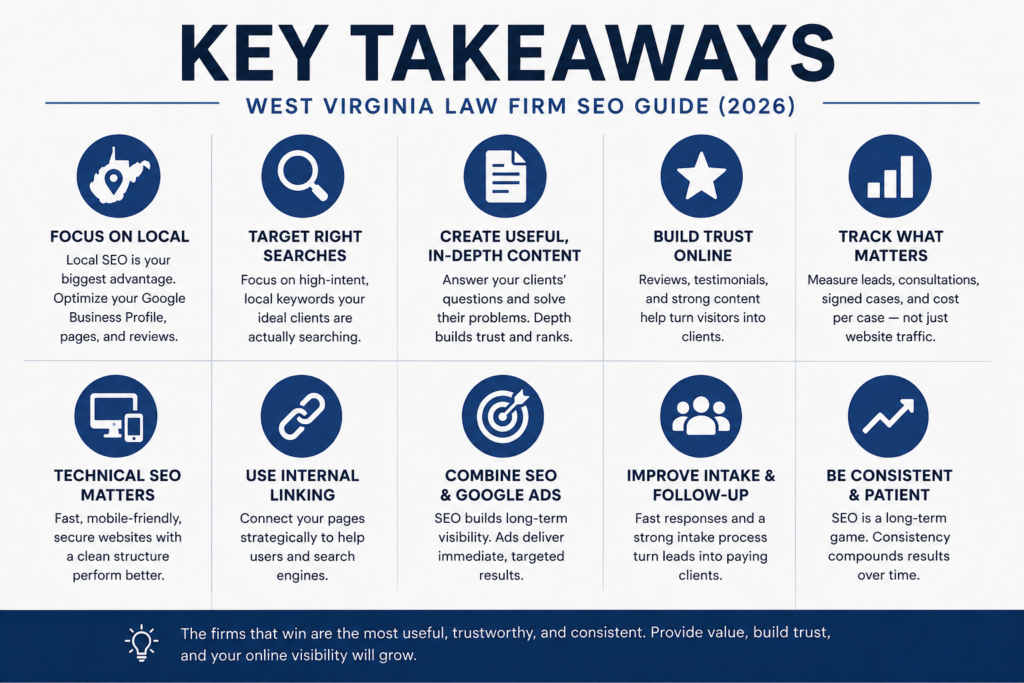
    The firms that win long-term are often not the loudest. They are the most useful, the most trustworthy, and the most consistent.
  • 5 Law Firm KPIs That Actually Grow Practice Revenue

    Introduction

    Most law firms struggle to grow not because they lack good lawyers — but because they’re flying blind on their marketing data. Even firms using CRMs like Clio, Lawmatics, or HubSpot often have the data — they just don’t know which numbers to focus on.

    In this guide, we break down the five essential law firm marketing metrics every attorney should track: cost per lead, lead conversion rate, speed to lead, cost per client, and lead source ROI.

    Whether you’re running Google Ads, investing in SEO, or relying on referrals, understanding these legal marketing KPIs is the difference between scaling intelligently and burning your budget.


    Cost Per Lead (CPL)

    What it is: How much you spend to generate a single lead.

    Formula: CPL = Total Marketing Spend ÷ Number of Leads

    Example:

    • $3,000 Google Ads
    • 100 leads
      • CPL = $30

    Why it matters:

    If you don’t know this, you can’t:

    • Compare channels (Google vs referrals vs SEO)
    • Control spending
    • Scale intelligently

    The mistake firms make:

    They track spend, not efficiency

    • Spending $5,000 isn’t bad
    • Spending $5,000 for 10 bad leads is

    Lead Conversion Rate (Lead → Client)

    What it is:

    The % of leads that become paying clients.

    Formula:

    Conversion Rate = Clients ÷ Leads

    Example:

    • 100 leads
    • 20 clients
      • 20% conversion rate

    Why it matters:

    This is where money is made or lost.

    Two firms:

    • Firm A: 10% conversion
    • Firm B: 25% conversion

    Same leads. Completely different outcomes.

    What impacts it:

    • Speed to respond
    • Intake quality
    • Follow-up process
    • Trust signals

    • This is a systems problem, not a marketing problem

    Speed to Lead (Response Time)

    How fast you respond to a new lead.

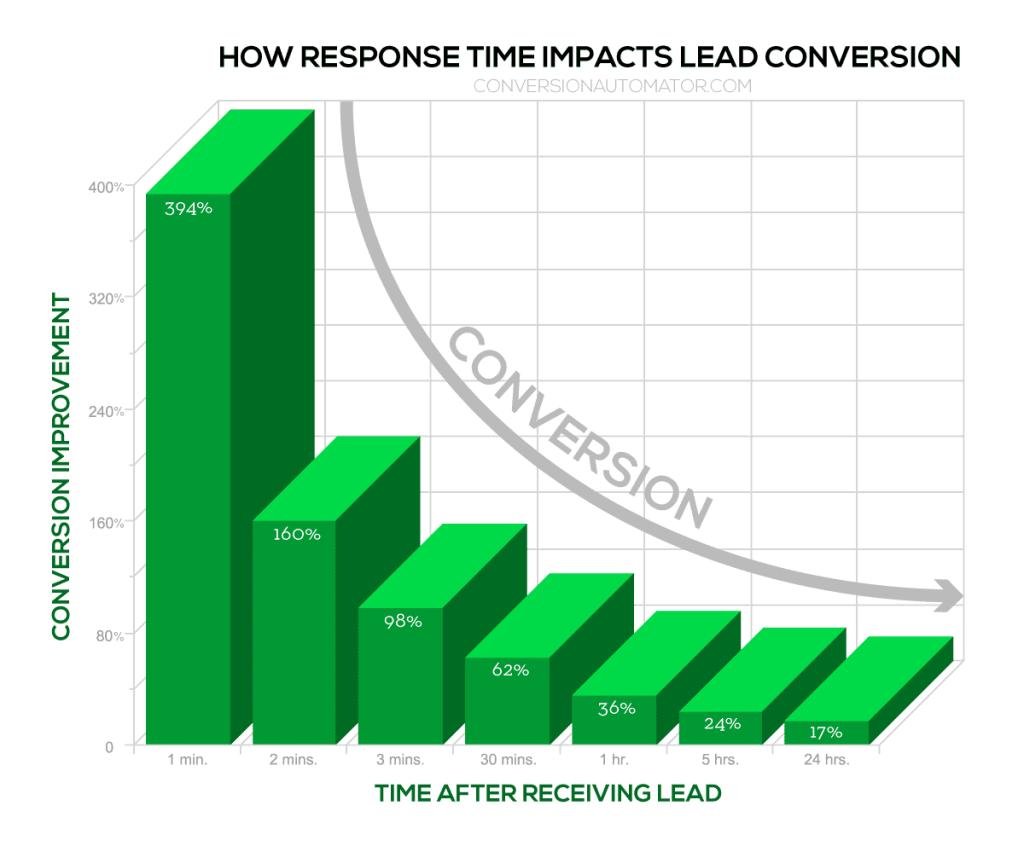
    The attorney lead response time benchmark is clear: within 5 minutes is elite, 1 hour is decent, next day means you’re losing clients to competitors who picked up faster. Studies consistently show that the first firm to respond wins the case the majority of the time — and in a world where potential clients are submitting forms to multiple firms simultaneously, speed is a competitive advantage, not a courtesy.

    A strong law firm intake process doesn’t happen by accident. It requires systems: auto-text confirmations, CRM alerts, and dedicated intake staff coverage during peak inquiry hours. This single metric can double your revenue without spending another dollar on leads.

    What it is:

    How fast you respond to a new lead.

    Benchmark:

    • Within 5 minutes = elite
    • 1 hour = decent
    • Next day = losing clients

    Why it matters:

    The first firm to respond: Wins the case most of the time

    Reality:

    • Leads contact multiple firms
    • You’re competing in real time

    Fix:

    • Auto-text response
    • CRM notifications
    • Intake staff coverage
    • AI Voice Agents

    This single metric can double your revenue without more leads


    Cost Per Client (Case Acquisition Cost)

    What it is:

    How much it costs to acquire a paying client.

    Formula:

    Cost Per Client = Total Marketing Spend ÷ Number of Clients

    Example:

    • $3,000 spend
    • 20 clients
      • $150 per client

    Why it matters:

    This is the metric that actually connects to profit.

    You can have:

    • Cheap leads
    • But expensive clients

    The insight:

    If your average case value is $3,000:

    • Paying $150 = great
    • Paying $1,500 = dangerous

    This is where smart firms scale… and others burn money


    Lead Source ROI (What’s Actually Working)

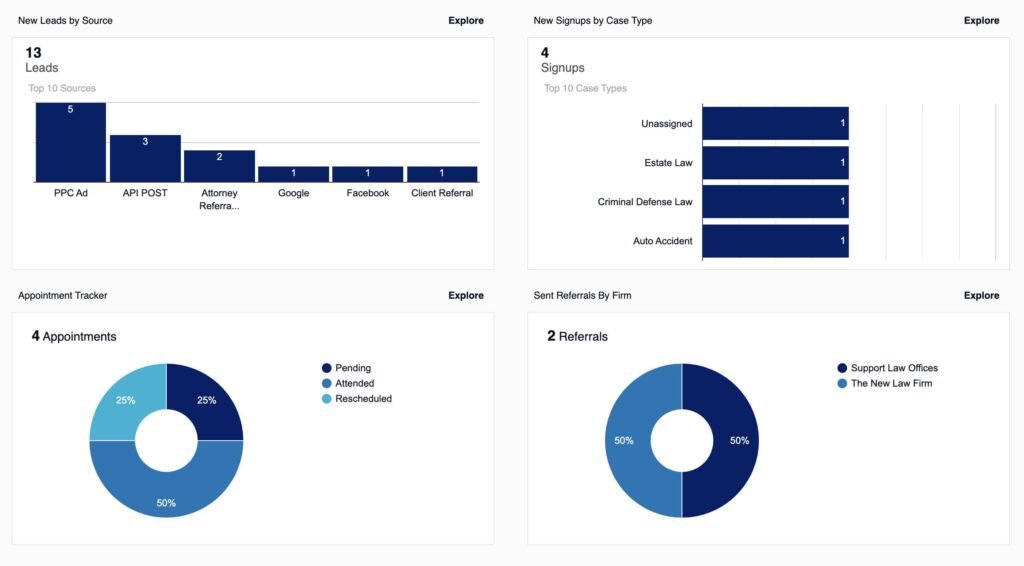
    Which channels produce your best clients — not just your most leads.

    Tracking legal marketing ROI by source reveals something most firms miss: volume and quality are not the same thing. Google Ads might generate 80 leads a month while referrals bring in 15 — but if referrals close at 60% and Ads close at 8%, the math tells a very different story about where your budget should go. Without source-level tracking, you’ll keep funding the channel that looks productive while starving the one that actually is.

    For each channel — Google Ads, SEO, referrals, Avvo, social media — track leads generated, conversion rate, and revenue produced. That’s the only way to make allocation decisions based on profit, not assumption.

    What it is:

    Which channels produce the best clients.

    Examples:

    What to track:

    • Leads per source
    • Conversion rate per source
    • Revenue per source

    Why it matters:

    Not all leads are equal.

    Example:

    • Google Ads → lots of leads, low conversion
    • Referrals → fewer leads, high conversion

    Without this, you’ll invest in the wrong channels


    The Bigger Picture: These Metrics Work Together

    This isn’t about tracking numbers.

    It’s about understanding your pipeline:

    1. Traffic → Leads
    2. Leads → Clients
    3. Clients → Revenue

    If something breaks:
    One of these metrics tells you where


    What Most Law Firms Get Wrong

    They:

    • Track leads (vanity metric)
    • Ignore conversion
    • Ignore response time
    • Don’t connect spend to revenue

    That’s how firms “feel busy” but don’t grow


    The Simple System (You Can Implement This Week)

    You don’t need a complex setup.

    Start with:

    • A CRM (even basic)
    • Lead source field (required)
    • Intake tracking
    • Weekly review

    Track:

    • Leads
    • Clients
    • Source
    • Time to respond

    That’s it.

    Most Firms Already Have Enough Leads

    In many cases, law firms do not have a lead problem. They have a conversion problem.

    Faster response times, better intake systems, and more consistent follow-up can often improve revenue more than simply increasing ad spend.


    Final Thought

    The firms that win aren’t always the best lawyers.

    They’re the ones who:

    • Respond faster
    • Track better
    • Improve consistently

    Everything else compounds from there.

    Many firms already have enough traffic — they just lack visibility into what is actually converting.

    If your law firm is investing in SEO, Google Ads, or digital marketing and you are not sure where the bottlenecks are, reach out through WV Lawyer Help for a free high-level review of your current marketing funnel and intake process.