If you’ve ever hired a lawyer in West Virginia, there’s a good chance they held money for you at some point — a retainer, a settlement check, or funds to cover future expenses. But where exactly does that money go? And how do you know it’s safe?
The answer lies in something called a client trust account — and a West Virginia ethics rule that every licensed attorney must follow: Rule 1.15 of the WV Rules of Professional Conduct.
What is a client trust account?
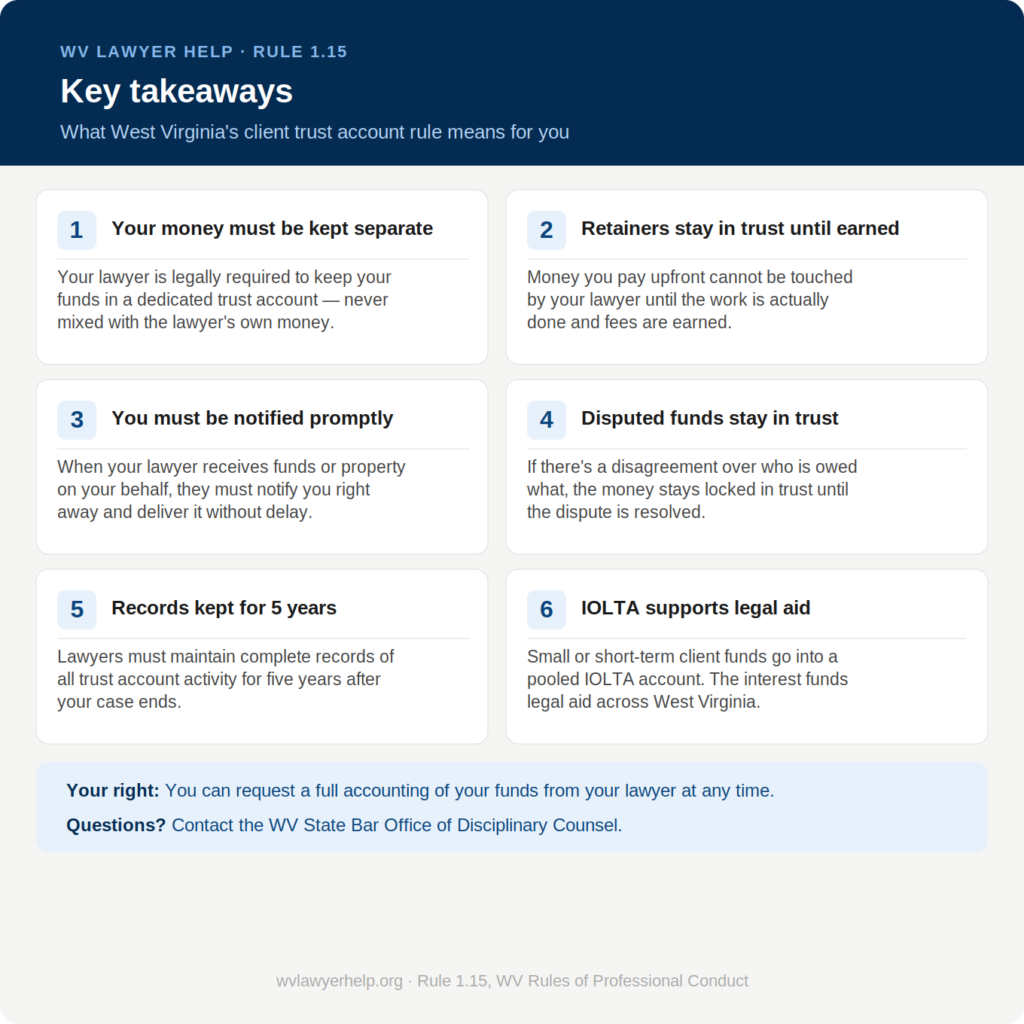
A client trust account is a separate bank account that a lawyer is required by law to maintain for holding client money. Think of it like a lockbox — your money goes in, and your lawyer can’t touch it for their own purposes. It has to be kept completely separate from the lawyer’s own personal or business money.
Under Rule 1.15, that account must be at a federally insured bank, and it must be kept in West Virginia (unless you’ve agreed otherwise in writing). The account has to follow specific State Bar rules, including one called Administrative Rule 10, which requires the bank to notify the State Bar if the account ever goes negative — even by accident.
West Virginia lawyers are treated like financial trustees when it comes to your money. They have a legal duty to protect it.
Why does this rule exist?
The rule exists because lawyers sometimes hold a lot of money that doesn’t belong to them. Without strict rules, there would be nothing stopping an unscrupulous attorney from dipping into client funds to pay their own bills — or accidentally spending client money thinking it was theirs.
Rule 1.15 closes that door. It makes clear: client money is client money, full stop.
What kinds of money go into a trust account?
Several types of funds must be held in trust:
- Retainers and advance fees — Money you pay upfront before the lawyer does any work. It stays in trust until the lawyer actually earns it. Learn more: Why your lawyer can’t touch your retainer yet.
- Settlement proceeds — If you win or settle a case, that money is held in trust while your lawyer figures out what goes to you, what covers fees, and what pays any outstanding liens.
- Third-party funds — Sometimes lawyers receive money that belongs partly to someone other than the client, like a doctor with a medical lien on a personal injury settlement.
What about non-cash property?
It’s not just money. If a lawyer holds documents, contracts, securities, or other valuables that belong to you, those have to be safeguarded too — stored separately from the lawyer’s own property, typically in a safe deposit box.
How long does a lawyer have to keep records?
West Virginia lawyers must keep complete records of all trust account activity for five years after a case ends. That means bank statements, deposit records, withdrawal records — everything. If you ever need to look back at how your money was handled, those records should be there.
What is an IOLTA account?
Sometimes the money a lawyer holds for a client is small, or will only be held for a very short time. In those cases, it doesn’t make sense to open a separate account just for that one client. Instead, the lawyer uses a special pooled account called an IOLTA account — short for Interest on Lawyers Trust Accounts.
All small or short-term client funds go into this shared account. The interest the account earns doesn’t go to you or the lawyer — it goes to fund legal aid programs across West Virginia, helping low-income residents access legal services. Read more: What is IOLTA and where does the interest go?
What if your lawyer mishandles your funds?
If a West Virginia lawyer steals from or mishandles a client trust account, they can face serious consequences — including disbarment. Additionally, West Virginia has a Client Protection Fund, which exists specifically to reimburse clients who lose money due to a lawyer’s dishonest conduct. Learn how the Client Protection Fund works.
What should you do if you have questions about your trust account?
You have the right to ask your lawyer for a full accounting of any funds they hold for you — at any time. They are required to respond promptly. If you believe something is wrong, you can contact the West Virginia State Bar’s Office of Disciplinary Counsel.
Understanding how your money is protected is part of being an informed client. Rule 1.15 isn’t just legal jargon — it’s one of the most important consumer protections in West Virginia’s legal system.